Rolex Quartz: The Brand’s Leap Into Electronic Precision
The Rolex Quartz era represents one of the most fascinating periods in Rolex history. While the brand is best known for mechanical movements, Rolex made a significant investment in quartz technology—resulting in the development of the Rolex Oysterquartz, one of the most precise and technologically advanced watches of its time.
Designed during the rise of quartz watchmaking in the 1970s, the Rolex Quartz models combined electronic accuracy with traditional Rolex craftsmanship, creating a unique category within the brand’s lineup.
Rolex Quartz History: From Innovation to Oysterquartz
Rolex began experimenting with quartz technology as early as the 1950s, but major development accelerated in the late 1960s and early 1970s during the “Quartz Crisis.”
Key milestones include:
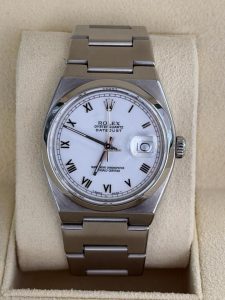
- Early quartz prototypes, including experimental models that never reached production
- Introduction of the Beta 21 movement, one of the first Swiss quartz calibers
- Launch of the Rolex Oysterquartz in 1977, featuring in-house quartz movements
Unlike many brands that outsourced quartz technology, Rolex eventually developed its own calibers, reinforcing its reputation for innovation.
Rolex Oysterquartz: The Core of Rolex Quartz Models
The most well-known Rolex Quartz watches fall under the Oysterquartz line.
Notable models include:
- Datejust Oysterquartz (Ref. 17000 / 17014)
- Day-Date Oysterquartz (Ref. 19018)
These watches featured Rolex’s in-house quartz movements:
- Caliber 5035 (Datejust)
- Caliber 5055 (Day-Date)
Approximately 100,000+ units were produced over a 26-year run, making them relatively rare compared to other Rolex models.
Rolex Quartz Movement and Accuracy
A defining feature of the Rolex Quartz models is their exceptional precision.
Key performance characteristics include:
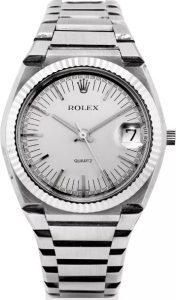
- 32 kHz quartz resonator for high-frequency accuracy
- COSC-certified electronic chronometer status
- Accuracy significantly greater than mechanical watches
- Battery life typically lasting 2–5 years
Rolex was one of the first brands to achieve chronometer certification for a quartz wristwatch, highlighting the technical significance of the Oysterquartz.
Rolex Quartz Design and Build Quality
Despite using electronic movements, Rolex Quartz watches maintained the brand’s signature craftsmanship.
Key design elements include:
- Integrated case and bracelet design (distinctive angular profile)
- Use of stainless steel, white gold, and yellow gold
- Sapphire crystal for durability
- High-quality finishing across all components
Even though they were quartz-powered, these watches were built with the same attention to detail as mechanical Rolex models.
Rolex Quartz Size, Weight, and Specifications
Typical specifications of Rolex Quartz (Oysterquartz) models include:
- Case diameter: approximately 36mm
- Movement height: around 6.35mm
- Use of 11 jewels within the quartz movement
- Solid construction with substantial weight depending on material
Gold models, particularly the Day-Date versions, contain a significant amount of precious metal, adding to their value.
Distinct Features of Rolex Quartz Watches
One of the most recognizable traits of the Rolex Quartz models is their distinct ticking motion.
Unlike sweeping mechanical movements:
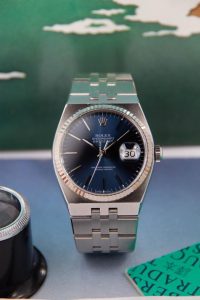
- Quartz models tick once per second
- The sound is more pronounced due to the movement design
Additional standout features include:
- Smooth crown operation
- Secure bracelet construction
- Clean, precise dial finishing
These elements reflect Rolex’s commitment to quality—even in a non-mechanical watch.
Rolex Quartz vs Mechanical Rolex Models
The Rolex Quartz models differ significantly from traditional Rolex watches:
- The Rolex Daytona focuses on chronograph performance
- The Rolex Submariner is built for diving
- The Rolex GMT-Master II tracks multiple time zones
- The Rolex Milgauss resists magnetic fields
In contrast, the Rolex Quartz (Oysterquartz) emphasizes precision, electronic innovation, and accuracy, offering a different kind of performance.
Rolex Quartz Market Value and Collectability
Although initially more affordable than mechanical Rolex watches, Rolex Quartz models have gained collector interest over time.
They are valued for:
- Their role in Rolex’s technological history
- Limited production compared to other models
- Unique design and integrated bracelet style
Today, the Rolex Oysterquartz is considered a niche collectible, appealing to enthusiasts who appreciate both quartz innovation and Rolex heritage.
Final Thoughts on Rolex Quartz
The Rolex Quartz era represents a bold step in the brand’s history—combining electronic precision with traditional craftsmanship. While Rolex ultimately returned its focus to mechanical movements, the Oysterquartz models remain an important part of its legacy.
For collectors seeking something different from the typical Rolex lineup, the Rolex Quartz offers a rare blend of innovation, accuracy, and historical significance.